

Your Tractor, Your Data: How the EU Data Act Enables Predictive Maintenance for Farmers
A tire blowout in the middle of harvest doesn’t just cost you a tire. It costs you precious hours you can’t afford to lose, risks causing further damage to your equipment, and forces a frantic scramble to find a replacement right when everyone else is busy in the field. But what if that blowout could have been avoided?
Modern agricultural machinery is equipped with sensors that detect the very signals that often precede a breakdown: tire pressure, axle wear, load distribution, engine stress under various conditions, operating temperatures, hydraulic pressure, and much more. In other words, your equipment is already producing the data that indicates when a component is nearing the end of its useful life.
Historically, much of this data has been funneled into the manufacturer’s systems and made easily accessible only to dealers, while the farmer who owns and operates the machine had limited access. From September 2025, with the implementation of the European Data Act, this situation changes: the data generated by connected equipment becomes accessible to the user, allowing farmers to use it directly, including for predictive maintenance.
What is Predictive Maintenance?
Most maintenance programs fall into one of these two categories:
- Reactive Maintenance: You intervene when something breaks. It’s simple and often less expensive in the short term—until the breakdown occurs at the worst possible moment.
-
Scheduled Maintenance: The machine undergoes service at fixed intervals. This is generally better than waiting for a failure, but it can lead to replacing components that still have useful life left.
Predictive maintenance is different. Instead of relying on a calendar or waiting for a failure, it uses performance and status data to identify when maintenance is actually necessary. Irregular tire wear, higher-than-normal engine temperatures, or a gradual drop in hydraulic pressure tend to emerge as patterns long before an obvious problem manifests.
For farmers, the benefits are tangible and immediate:
- Replacing tires because the data indicates it’s necessary, not because of an arbitrary deadline.
- Identifying emerging issues during the off-season rather than during peak harvest.
- Making decisions based on real usage, not on “test track” assumptions.
The main obstacle, until today, has been access to the underlying data. This is where the Data Act makes the difference.
How the Data Act Unlocks Your Maintenance Data
The Data Act establishes a clear principle: users of connected products must be able to access the data those products generate. For farmers using modern tractors, harvesters, sprayers, and connected components like smart tires, this paves the way for obtaining performance and status data directly relevant to maintenance.
For predictive maintenance, this includes exactly the data you need:
- Tire pressure trends over time
- Wear indicators and patterns
- Load and stress profiles
- Operating temperatures
- Error codes and performance trends
- Component-level performance metrics
In the past, manufacturers and authorized dealers could use this information to generate recommendations, often without offering farmers the same visibility. With the access rights now provided, farmers can obtain data directly and, crucially, share it with third parties.
This is fundamental for competition and service quality. An independent tire specialist analyzing your actual wear patterns can provide much more accurate advice than someone relying on generic assumptions. When multiple service providers work with the same raw data, competition on price and quality increases.
Practical Steps to Access Your Data
Access should be straightforward. In practice, here is what you can expect:
Identify what data your equipment collects
Data varies by machine and model. Manufacturers should provide guidance on what is being collected and how to access it, including component temperatures and load data.
Request access in writing
You can request access through the manufacturer or the dealer channel. Request the maintenance and performance data, including real-time access where available. You should not have to justify the request.
Expect usable formats
Data should be provided in a structured, machine-readable format suitable for import into farm management or maintenance software—not static PDFs.
No cost for raw data access
Manufacturers should not charge for access to raw data. They may charge for “value-added” services (analytics, dashboards), but the underlying data must be accessible without a separate fee.
Using Data for Smarter Maintenance
Once you have access, the key is to treat data as an operational tool, not as isolated readings.
Monitor trends, not single values
A single tire pressure reading tells you very little. Pressure patterns over weeks or months can reveal slow leaks, degradation, or mounting issues.
Link performance to operating conditions
Faster wear in a specific field might indicate soil conditions or drainage issues. Seasonal stress patterns can suggest when preventive maintenance is most cost-effective.
Share data with independent specialists
One of the most practical advantages is the ability to share data. A specialist analyzing real-world wear patterns can provide replacement advice far more accurately than generic guidelines.
Let data dictate the schedule
Move from fixed deadlines to evidence-based timing. Service what is wearing out; leave what is performing well. Use quiet periods for preventive work when data indicates a problem is emerging.
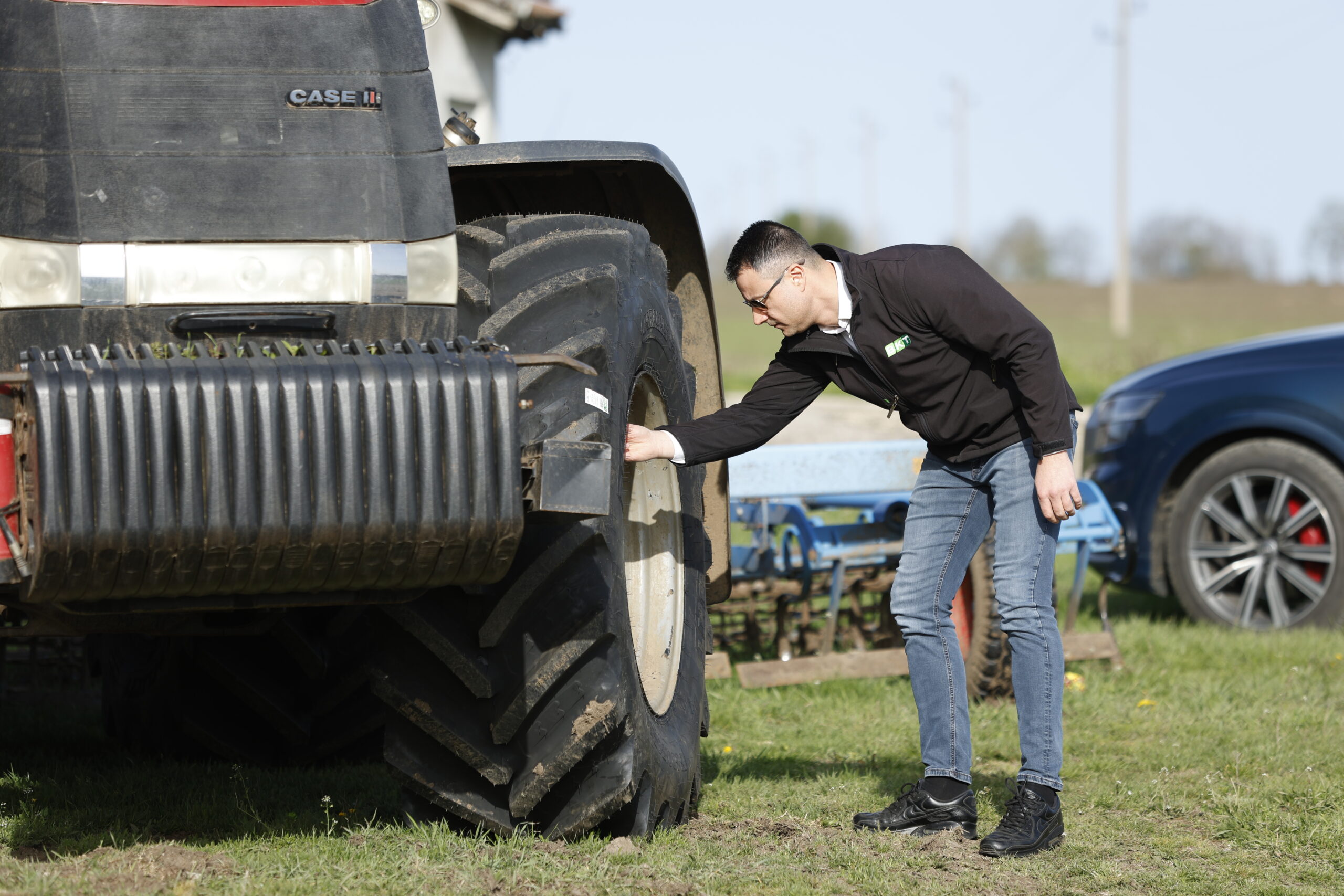
What you can do right away
Ask the right questions when purchasing new machinery
What maintenance data is collected? How do I access it? Can it be downloaded? Can it be shared with third parties? Treat data access as a key purchasing criterion, not a secondary detail.
Analyze your existing fleet
Identify what data each machine records and what is already accessible. Equipment purchased before September 2025 may still fall within the scope of the Act, depending on the product and circumstances: it is worth checking what is available today.
Find the right people to interpret the data
The value isn’t just in the data you own, but in who can transform it into actionable decisions. Independent mechanics, tire specialists, and agronomic or operational consultants can all play a role.
Start simple
You don’t need advanced analytics to see benefits. Even basic monitoring of wear indicators, temperature trends, and pressure history can outperform generic “one-size-fits-all” maintenance programs.
The Big Picture
For years, the data that could have made maintenance smarter remained effectively locked within manufacturer ecosystems. Farmers owned the machines, but lacked meaningful access to their own data. The Data Act changes this dynamic.
Predictive maintenance isn’t technology for its own sake. It means avoiding breakdowns during harvest, getting the maximum value from components that still have useful life, and solving problems when they are simplest and cheapest to address. The data to do this has always existed. Now, you can use it.
You work hard to maintain your equipment. Your data can work just as hard for you.
Rocco Limongelli, expert in Artificial Intelligence and Robotics.







Facebook
Select your area of interest and explore all BKT Tires social channels.