

Autonomous Agriculture: A Farmer’s Guide to Safety and Compliance
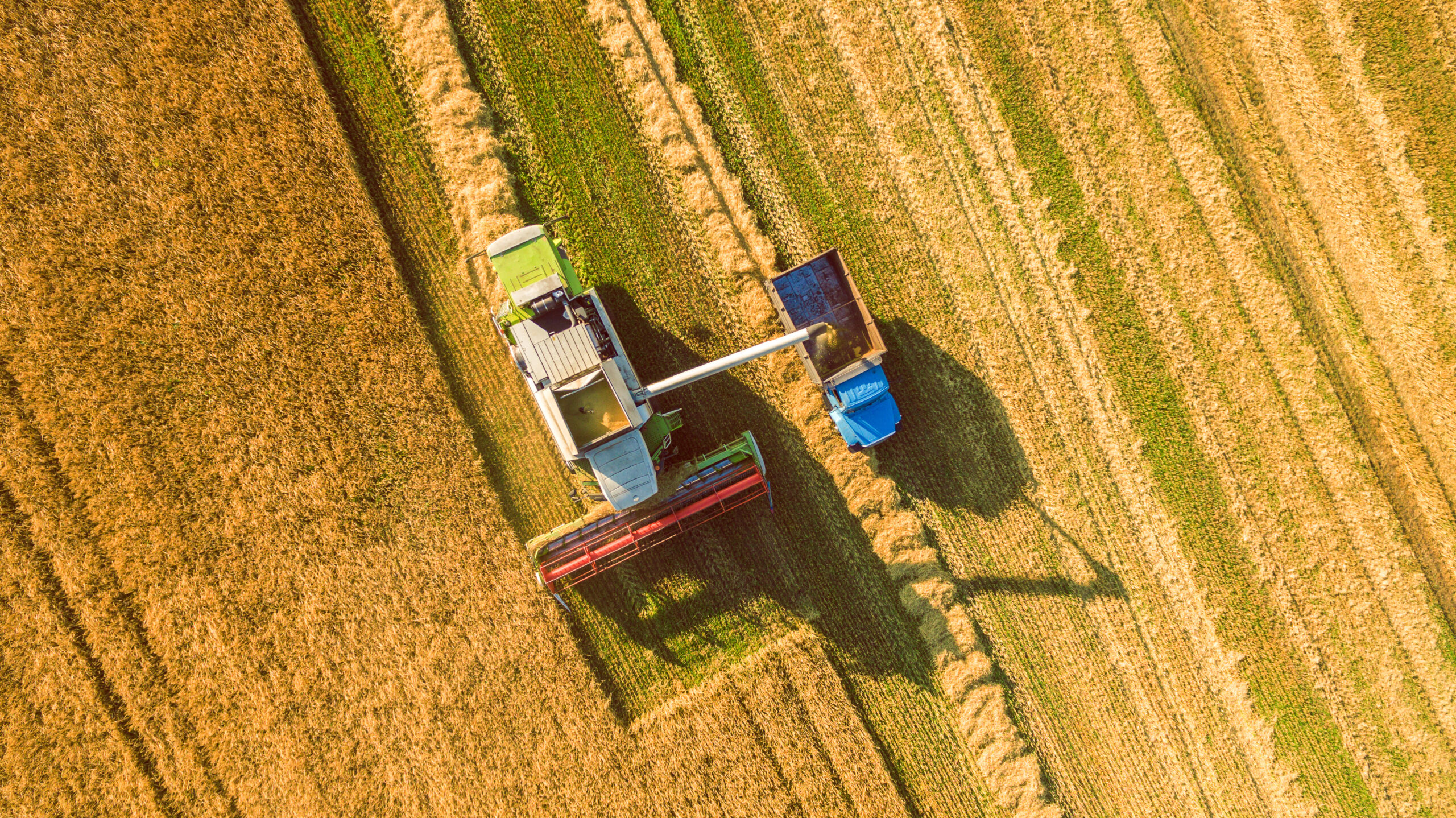
The autonomous tractor that drives through the field at night. The robotic sprayer that navigates between rows without human hands at the helm. The self-guided harvester that optimises its route in real-time. These are no longer prototypes locked away in a laboratory or testing facility. They are appearing in fields all over Europe, bringing with them unprecedented levels of efficiency that were until recently considered science fiction.
However, a question that many operators have failed to consider until recently is: who is responsible when an autonomous machine works alongside a human in a field? The response to that question under current EU law is clear, and it places a significant burden on the farmer or operator.
The Legal Starting Point: You Remain the Employer
The primary legislation in relation to health and safety in the EU is the Framework Directive 89/391/EEC, which was passed in 1989 but remains very much in force today. The principle of that law is clear: employers are charged with ensuring that workers are “safe and healthy in every aspect related to work.” This duty does not cease to exist simply because a machine works autonomously. In fact, it arguably becomes more significant.
The Directive requires employers to conduct risk assessment, provide adequate training, and consult workers on all aspects that impact their safety, including the implementation of new technologies. When you use an autonomous weeder or a robotic feed pusher, you are implementing a new technology. And it is your responsibility to assess and manage the risks associated with it.
This is not a mere technicality. Labor inspectors in all EU Member States have the power to conduct investigations into workplace accidents. And if you fail to conduct adequate risk assessment for autonomous equipment, you and your operators may be subject to administrative and civil consequences.
The New Machinery Regulation: What Changes in January 2027
On 20th January 2027, a new EU Regulation on machinery (2023/1230) will come into effect, replacing the EU Directive that has governed machinery safety since 2006. And for autonomous machinery, the changes are significant.
For the first time, the Regulation includes “autonomous mobile machinery,” i.e., machinery that provides safety functions during movement and operation without continuous operator intervention. And such machinery, especially if it uses AI and ML, is considered high-risk and needs to be certified by a notified body. Self-certification is not allowed.
For farmers and operators, three aspects of the Regulation are especially noteworthy.
Firstly, autonomous machinery needs to be confined to a specific area and be able to be stopped, restarted, or placed in a safe position by a human supervisor. This is known as the “supervisory function,” and it is a mandatory requirement. If your machinery does not have this facility, it is not compliant.
Secondly, the manufacturer must evaluate the risks not only at the point of sale but also take into consideration the potential changes in the behaviour of the machine over time, especially when the system uses AI technology. The consequences for the user are considerable because you must be aware of updates, changes, and new risk assessments released by the manufacturer.
Thirdly, all decisions taken by autonomous machines need to be logged and stored for at least a year. This requirement for data logging has obvious implications in the event of an accident investigation.
The AI Act: Another Layer of Obligation
Another regulation that farmers need to comply with is the EU AI Act (Regulation 2024/1689), which came into effect on 1st August 2024 and will come into full effect by August 2026. There will be compliance requirements for high-risk AI systems in agricultural and motor vehicles by August 2027.
The AI Act classifies AI systems in machinery regulated by EU product safety laws, including agricultural vehicles, as high-risk AI systems. This requires transparency, documentation, and human oversight of AI systems. The deployers of high-risk AI systems, including farmers, need to use AI systems in accordance with the manufacturer’s instructions and implement human oversight of AI systems.
This means that farmers need to read the instruction manual of the autonomous machinery they use. It is no longer a choice; it is a requirement under EU law. Using autonomous machinery outside the manufacturer’s instructions or without human oversight could be a breach of EU law.
Steps for Compliance
What does all of this mean in practice? If you are a farmer planning to use autonomous machinery in the near future, here are five things you need to do:
Carry out a risk assessment before deploying autonomous machinery. This is not just a formalistic exercise. Think about the risks of autonomous machinery to people in the farm, including workers and people outside the farm. Think about scenarios in which human presence in the area of operation of autonomous machinery could lead to danger.
Define operating zones and protocols. Autonomous machines must operate within a set boundary. These operating zones and protocols must be communicated to all workers, contractors, and visitors. This can be achieved through physical boundaries and clear communication to all individuals entering an active zone.
Define and train supervisors. Under the “supervisory function” of the Machinery Regulation, a human element must be able to observe and react to the autonomous machinery. This requires a clear definition of the supervisor and their training. This is not just a recommendation; it is a requirement.
Maintain documentation and records. Keep records of all decisions and actions taken. If your autonomous machinery records its decision-making processes, it is essential to understand how to access and interpret these records. These records are your only defence in the event of an incident.
Maintain a relationship with your equipment supplier. Autonomous machinery suppliers will be required to provide updated risk assessment reports in response to changes in their decision-making processes. Establish a relationship to receive these updates and incorporate them into your operating protocols. Companies such as BKT, leaders in innovation in the off-highway industry, understand that the relationship between the supplier and operator is a partnership and not a one-time sale.
Looking Forward: Responsibility in a Changing Landscape
The framework in which autonomous agricultural machinery is regulated remains in a state of evolution. The Machinery Regulation and AI Act are major steps forward, but there are still many questions to be answered—especially in relation to allocation of liability in case of failure, as well as the interaction between product safety law and work safety law.
What is clear, however, is that the onus for ensuring workplace safety does not change simply by virtue of the fact that there is no driver. The farmer and fleet owners will continue to have the onus of ensuring that people working alongside these machines are safe. This means engaging with these issues, being aware of the technology, assessing risks, and ensuring that there is adequate record-keeping to prove compliance.
There is enormous potential for autonomous farming: labour savings, round-the-clock operation, and unmatched precision. The reality is, however, that realizing this potential is not as simple as buying the right technology. The farmer must realize that when robots work the land, the law still looks to the farmer.
Looking Forward: Responsibility in a Changing Landscape
The framework in which autonomous agricultural machinery is regulated remains in a state of evolution. The Machinery Regulation and AI Act are major steps forward, but there are still many questions to be answered—especially in relation to allocation of liability in case of failure, as well as the interaction between product safety law and work safety law.
What is clear, however, is that the onus for ensuring workplace safety does not change simply by virtue of the fact that there is no driver. The farmer and fleet owners will continue to have the onus of ensuring that people working alongside these machines are safe. This means engaging with these issues, being aware of the technology, assessing risks, and ensuring that there is adequate record-keeping to prove compliance.
There is enormous potential for autonomous farming: labour savings, round-the-clock operation, and unmatched precision. The reality is, however, that realizing this potential is not as simple as buying the right technology. The farmer must realize that when robots work the land, the law still looks to the farmer.




Facebook
Select your area of interest and explore all BKT Tires social channels.